
Wonderful introduction:
There are always more missed things in life than not missed ones. Everyone has missed countless times. So we don’t have to feel guilty and sad about what we miss, we should be happy about what we have. If you miss beauty, you have health; if you miss health, you have wisdom; if you miss wisdom, you have kindness; if you miss kindness, you have wealth; if you miss wealth, you have www.vifu.netfort; if you miss www.vifu.netfort, you have freedom; if you miss freedom, you have personality...
Hello everyone, todayXM Forex will bring you "[XM Forex]: A rare "bright sword" by the Fed hawks, analysis of the short-term trends of spot gold, silver, crude oil, and foreign exchange on December 12." Hope this helps you! The original content is as follows:
The three major U.S. stock index futures rose or fell mixedly, with the Dow futures rising 0.14%, the S&P 500 futures falling 0.18%, and the Nasdaq futures falling 0.61%. Germany's DAX index rose 0.25%, Britain's FTSE 100 index rose 0.25%, France's CAC 40 index rose 0.58%, and the European Stoxx 50 index rose 0.35%.
⑴ Chicago Fed President Goolsby explained in detail on Friday his reasons for opposing an interest rate cut this week. The core view is that the Fed should wait for more data on inflation, especially considering that prices are still a major concern for businesses and consumers. ⑵ Goolsby emphasized that inflation has been above the target for four and a half consecutive years, and the process of controlling inflation has recently stalled. In this context, waiting is a more prudent approach and will bring almost no additional risks. ⑶ He pointed out that there are currently few signs that the labor market is deteriorating sharply, and it is only "cooling slightly", so the Fed can wait until updated data is obtained early next year before deciding whether to act. ⑷ Goolsby expressed concern about the source of the current high inflation, believing that it may stem from tariffs and is temporary, but the danger is that it may last longer. ⑸Despite his objections, he is still optimistic aboutHe said that if future data shows that inflation returns to target, interest rates may still fall "significantly" next year, but he is worried about cutting interest rates prematurely at this point. ⑹ This statement reveals the differences within the Fed on the principle of "data dependence": one party believes that there is enough evidence to support interest rate cuts to prevent economic risks; the other party (represented by Goolsby) insists on the need to see more conclusive evidence of controlled inflation, highlighting that fighting inflation is still a core priority for some policymakers.
⑴ Capital flow data shows that in the week ending December 10, U.S. stock funds received a www.vifu.net inflow of US$3.3 billion. This is the first time in three weeks that there has been a single-week www.vifu.net buying, almost www.vifu.netpletely reversing the www.vifu.net outflow of US$3.52 billion in the previous week. ⑵ This return of funds coincides with the market's expectation for the Federal Reserve's policy to cut interest rates, indicating that investors are relocating risky assets before the central bank's easing policies are introduced. ⑶ Looking at industry sectors, U.S. stock industry funds had a www.vifu.net inflow of US$2.81 billion, setting the largest weekly inflow since the week of October 22. Among them, funds in the metals and mining, industrial and healthcare sectors attracted the most significant inflows. ⑷The bond market is also favored by funds. U.S. bond funds bought a www.vifu.net US$3.49 billion this week, far exceeding the previous week. Investors particularly favored short- and medium-term investment-grade bond funds, injecting $2.61 billion into them, the largest inflow in seven weeks. ⑸ At the same time, money market funds experienced a www.vifu.net outflow of US$4.58 billion, which was in sharp contrast to the huge www.vifu.net inflow of US$105.03 billion the previous week. ⑹ Despite the overall return of funds, market sentiment is not entirely optimistic. Investors still have doubts about the slowdown in profit guidance of technology www.vifu.netpanies represented by Oracle, especially the investment return cycle in the field of artificial intelligence, which may lead to intensified rotation of funds among sectors in the future.
⑴ U.S. Treasury bonds further weakened and the yield curve steepened in extremely thin trading overnight. The trading volume of 10-year Treasury bond futures was limited, and the price fluctuated within a certain range. ⑵ British government bonds have become the focus of the market. After the release of weak GDP data, the yield curve also showed a steepening trend, which increased market expectations for the Bank of England to cut interest rates next week. Specifically, the 2-year British bond yield fell by 1.5 basis points, while the 10-year yield increased by 1 basis point. ⑶ German government bonds also weakened simultaneously, and their futures prices fell by about 12 minimum price changes from the settlement price. The gap between U.S. and U.S. 10-year Treasury bond yields has widened 4 basis points since the European close on Thursday as the European market missed the opportunity to www.vifu.netpensate for yields ahead of the issuance of 30-year Treasury bonds. ⑷The current market is showing typical year-end characteristics: liquidity is declining, but the trends in multiple asset classes (bond curve steepening, gold surge, stock market differentiation) jointly point to expectations of slowing economic growth and bets on a shift in monetary policy.
Danske Bank analysis pointed out that the Bank of England may cut interest rates at its interest rate meeting next Thursday. If it decides to cut the benchmark interest rate by 25 basis points to 3.75%, the pound exchange rate may face mild downward pressure. The agency predicts that the interest rate decision may be passed by a slim majority of 5 to 4. Reasons to support a rate cut include continued slowdown in inflation in October, an accelerated rise in unemployment in the fall, and an unexpected contraction in the economy in October. In addition, the slightly tight fiscal budget in November further strengthened the need for loose monetary policy. Analysts believe that these factors may prompt Bank of England Governor Bailey to change his stance and join the camp that supports interest rate cuts. Although the latest inflation and employment data will be released before the interest rate decision next week, Danske Bank predicts that these data will most likely not be enough to reverse the decision to cut interest rates. If the Bank of England starts an interest rate cut cycle earlier than market expectations, it may cause short-term pressure on the pound.
According to analysis by Berenberg economist Andrew Wishart, the severity of the British economic slowdown has exceeded previous expectations. The latest data shows that in the three months to October this year, UK GDP fell by 0.1% on a monthly basis, extending the cumulative output contraction since June to 0.4%. The continued weakness in survey data suggests that the current economic woes are largely due to deteriorating fundamentals rather than short-term budget-induced swings in confidence. Based on this, Berenberg adjusted his forecast for the direction of the Bank of England's monetary policy. The agency now expects that the Bank of England will implement a total of four interest rate cuts of 25 basis points each by July 2026, bringing the benchmark interest rate to 3.0% from the current level, a further reduction from its previous forecast of 3.5%. Wishart said that the economic downturn is the price that must be borne in order to achieve a sustainable return of inflation to the target level, but it currently appears that this "pain" may be more severe than expected.
⑴ German bond yields rose further on Friday, approaching a nine-month high, with the 10-year bond yield rising to 2.17%. It has risen by about 6 basis points this week, reflecting that the market has begun to price in the possibility of future interest rate hikes in the euro zone. ⑵This is in stark contrast to the U.S. market, where the Federal Reserve is expected to cut interest rates next year. This divergence in monetary policy expectations has narrowed the yield difference between the two-year Treasury bonds between the United States and the United States to 135.34 basis points, the smallest since May 2023. ⑶ The direct catalyst for the rise in yields is the www.vifu.netments this week by the European Central Bank's influential policymaker Isabel Schnabel, who suggested that the next step in interest rates may be to raise interest rates, although some institutions believe that this signal is premature and difficult to gain broad support within the Governing Council. ⑷ Money market pricing shows that traders have www.vifu.netpletely ruled out the possibility of an interest rate cut by the European Central Bank in 2026 and anticipate a rate increase by March 2027.About 58%. ⑸ Deutsche Bank predicts that the European Central Bank's terminal policy interest rate will be 2%. Its base scenario is that the next interest rate increase will be in mid-2027, triggered by fiscal easing and a tight labor market that jointly push inflation risks to the upside. ⑹ Despite expectations of interest rate hikes, some institutions see the value of German debt allocation. UBS strategists recommend going long German government bonds, arguing that their term premiums are too high given Germany's long-term growth and inflation prospects. Other analysts believe the U.S.-U.S. spread provides an opportunity for investors to take advantage of interest rate differences. ⑺The market will pay close attention to next week's intensive central bank decisions and the delayed release of U.S. employment data to confirm or modify the current divergent trading logic of U.S. and European monetary policies.
⑴ Spot LNG prices in Asia fell to a 20-month low this week. The average price of LNG delivered to Northeast Asia in January is estimated to be US$10 per million British thermal units, the lowest level since April 2024, and the delivery price in February is estimated to be US$9.60. ⑵The main reason for the price drop is that global LNG supply continues to be abundant, coupled with mild weather in many places in the northern hemisphere, which suppresses heating demand. The agency predicts that the heating index in Northeast Asia will remain below the ten-year average in the next two weeks. ⑶ Weak prices have stimulated the purchasing interest of some price-sensitive buyers. Indian buyers and Chinese importers have shown a certain buying interest, but this is mainly an opportunistic purchase, and the inventory of major utility www.vifu.netpanies in Northeast Asia is still relatively sufficient. ⑷ The European market is also under pressure. Its CIF benchmark price of LNG delivered in January is at a significant discount to the local TTF natural gas hub price. The position layout of investment funds, mild weather, and sufficient pipeline gas and LNG imports have jointly maintained the bearish atmosphere in the market. ⑸ The cross-regional arbitrage window has changed. The arbitrage space for U.S. goods shipped to Northeast Asia via the Cape of Good Hope has expanded, but is more strongly directed to the European market; while the arbitrage space via the Panama Canal has narrowed to a break-even level. ⑹ The current market presents structural characteristics: www.vifu.netmercial operators take advantage of low prices to build inventory or perform hedging, pushing www.vifu.net long positions to record highs, while hedge funds are expanding www.vifu.net short positions, and the long-short game continues against the backdrop of low winter inventories.
⑴ JPMorgan Chase issued a research report, raising the target stock price of Alphabet (Google) from US$340 to US$385, and clearly listed it as the preferred investment target in 2026. ⑵The bank’s core logic for being optimistic about Google is that it believes that Google has leadership, technology stack advantages, data advantages and global distribution www.vifu.network in the field of artificial intelligence. These factors will jointly drive the www.vifu.netpany’s growth acceleration and stable profit margins. ⑶The report specifically pointed out that as artificial intelligence drives higher return on investment and TV advertising budgets continue to shift to the Internet, Google's core businesses-search and YouTube advertising-will have healthy long-term development space. ⑷In cloud www.vifu.netputing businessOn the other hand, JPMorgan Chase believes that strong demand driven by artificial intelligence will drive Google Cloud to accelerate growth, and its growth rate is expected to reach a level of more than 40%. ⑸ The report also mentioned that the rapid expansion of Waymo, Google’s self-driving www.vifu.netpany, proves that the www.vifu.netpany also has strong innovation and execution capabilities in addition to its core search and cloud businesses. ⑹ Market consensus is still biased towards positive. According to institutional data, 56 of the 65 brokerages covering the stock have given it a "buy" or higher rating, and the median target price is US$322.50. JPMorgan Chase's view is significantly higher than the market consensus.
⑴ According to European diplomatic sources, the agreement on the use of frozen Russian national assets has not yet been finalized, and the final decision will be made at the upcoming EU summit. ⑵ The source clearly pointed out that Germany currently has "no other alternative" to provide financial support to Ukraine except promoting a loan program based on future Russian reparations. ⑶In this plan, Germany prefers to use Russian state-owned assets frozen in other European countries as a source of funds, and is prepared to bear a huge sum of up to 50 billion euros for this. ⑷The total debt involved in the entire loan program is expected to reach 210 billion euros, and the part borne by Germany forms the key cornerstone. ⑸ Sources warned that if this asset restructuring plan fails at the EU summit, it will send a "catastrophic signal" to Ukraine's continued resistance and the overall credibility of Europe's actions.
⑴ Market pricing shows that traders’ expectations for 2026 have shifted from interest rate cuts to interest rate increases. The interest rate expectations of most major central banks have turned more hawkish, with the exception of the Federal Reserve. ⑵ The Federal Reserve is expected to cut interest rates by 54 basis points before the end of 2026, and the probability of keeping interest rates unchanged at the next meeting is 73%; the Bank of England is expected to cut interest rates by 61 basis points, and the probability of cutting interest rates at the next meeting is 90%. ⑶The Bank of Canada is expected to raise interest rates by 25 basis points, and the probability of keeping interest rates unchanged at the next meeting is 93%; the European Central Bank is expected to raise interest rates by 10 basis points, and the probability of maintaining interest rates at the next meeting is 100%. ⑷The Bank of Japan is expected to raise interest rates by 67 basis points, and the probability of raising interest rates at the next meeting is 76%; the Reserve Bank of Australia is expected to raise interest rates by 40 basis points, and the probability of maintaining interest rates at the next meeting is 82%. ⑸The New Zealand Federal Reserve is expected to raise interest rates by 58 basis points, and the probability of maintaining interest rates at the next meeting is 97%; the Swiss National Bank is expected to raise interest rates by 6 basis points, and the probability of maintaining interest rates at the next meeting is 100%. ⑹ Currently, only the Federal Reserve and the Bank of England are still expected to cut interest rates several times before 2026. This divergence of monetary policies may put pressure on the US dollar and the pound, but if economic data triggers hawkish repricing, it may also bring trading opportunities. ⑺Next week, the market will usher in the U.S. non-farm payrolls report and consumer price index data. This will be a critical week. The focus is mainly on the non-farm payrolls report because the Federal Reserve still attaches great importance to the labor market situation.condition. ⑻ If the data is strong, especially a decline in the unemployment rate, it may trigger a hawkish repricing of interest rate expectations, thereby boosting the dollar and putting pressure on the stock market and precious metals. ⑼ On the other hand, if weak data will support expectations of further interest rate cuts, the trend may continue, the dollar may continue to weaken, the stock market may reach new highs, and precious metals remain strong.
⑴The Italian government plans to launch a series of tax increases to increase fiscal revenue, including imposing new taxes on small-value packages from non-EU countries and significantly increasing the financial transaction tax rate. ⑵ According to the amendment document submitted to Parliament, Rome will impose a tax of 2 euros on small parcels worth no more than 150 euros. This move is expected to bring in 122.5 million euros in revenue next year and 245 million euros in revenue each in 2027 and 2028. ⑶ This parcel tax is aimed at online platforms such as Shein and Temu to protect their fashion industry from low-cost imported goods mainly from China. This is consistent with the direction of proposals being discussed at the EU level. ⑷At the same time, the government plans to increase taxes on the transfer of stocks and other financial instruments, which is expected to increase an additional 337 million euros in revenue from next year. Specifically, the transaction tax rate in the unregulated market will increase from 0.2% to 0.4%, and the tax rate in the regulated market will increase from 0.1% to 0.2%. ⑸ As part of a package of new measures, the premium tax rate for vehicle accident insurance will be significantly increased from the current 2.5% to 12.5%, and banks' ability to use past losses to offset tax bills will be further restricted. ⑹ Government documents show that Italy has given up on its plan to cancel tax incentives for short-term rentals. Landlords can still enjoy a preferential tax rate of 21% on rental income from a single property, instead of the standard tax rate of 26%. But the ruling party has agreed to lower the threshold at which short-term rentals must register as a business, meaning heavier taxes and additional costs, from five properties to three. ⑺These measures highlight that Italy is under fiscal pressure and is trying to find a balance between increasing revenue, protecting local industries and responding to social concerns (such as over-tourism and rising rents) by adjusting the tax system.
⑴ Mark Dowding, chief investment officer of asset management www.vifu.netpany BlueBay Asset Management, said in a report that he tends to believe that the current rise in European government bond yields has begun to provide opportunities for increasing duration (that is, buying bonds). ⑵Dowding specifically mentioned Norwegian bonds, pointing out that although the Norwegian central bank currently maintains the cash rate at 4%, the market expects it to start cutting interest rates as inflation declines in the Scandinavian economies in the www.vifu.neting months. ⑶According to data, the current Norwegian 10-year government bond yield increased by 1.3 basis points to 4.18%, while the German 10-year government bond yield also increased by 1.4 basis points to 2.859%. ⑷This point of view conveys aA key signal is that some professional investors believe that this round of European debt sell-off triggered by concerns about inflation and interest rates may have been excessive, with limited upside space for yields and the value of allocation is emerging.
⑴ Kremlin foreign policy assistant Yuri Ushakov said on Friday that Russia has not yet seen the draft proposal revised by the United States after the latest round of talks with Ukraine. ⑵ In www.vifu.netments to reporters, Ushakov hinted that Russia might not like much of it, adding that the Kremlin needed to see the results of "aggressive brainstorming" planned by European and Ukrainian officials this weekend. ⑶ This statement was in response to Ukrainian President Zelensky’s statement on Wednesday. Zelensky said that Kyiv had reached agreement on key points of the post-war reconstruction plan in talks with relevant senior U.S. officials. ⑷The United States' proposal to establish an investment fund in Ukraine is a core aspect of the reconstruction plan, with target industries including rare metals and other fields. ⑸ Russian Foreign Minister Lavrov said on Thursday that there were no unresolved "misunderstandings" with Washington on the Ukraine issue, but emphasized that Moscow hopes that any peace plan should include collective security guarantees for all parties involved. ⑹ Subsequent developments, especially the outcome of the game between the United States and Russia over security guarantees and economic interests, may affect the prospects for regional stability, thereby disturbing the risk premium in the global crude oil market.
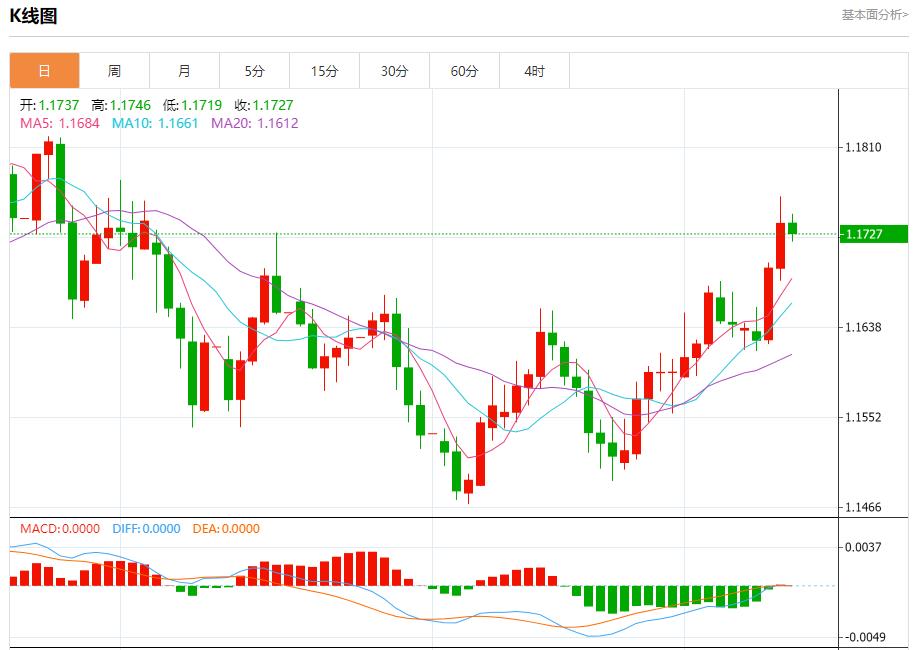
EUR/USD: As of 21:20 Beijing time, EUR/USD fell and is now at 1.1728, a decrease of 0.08%. Prices (EUR/USD) fell on the last trading day in New York pre-market as negative signals emerged on the relative strength indicator, with the primary bullish trend taking over after looking for rising lows as a basis for another rise and recovery, with trades taking place along the secondary trend lines supporting it.
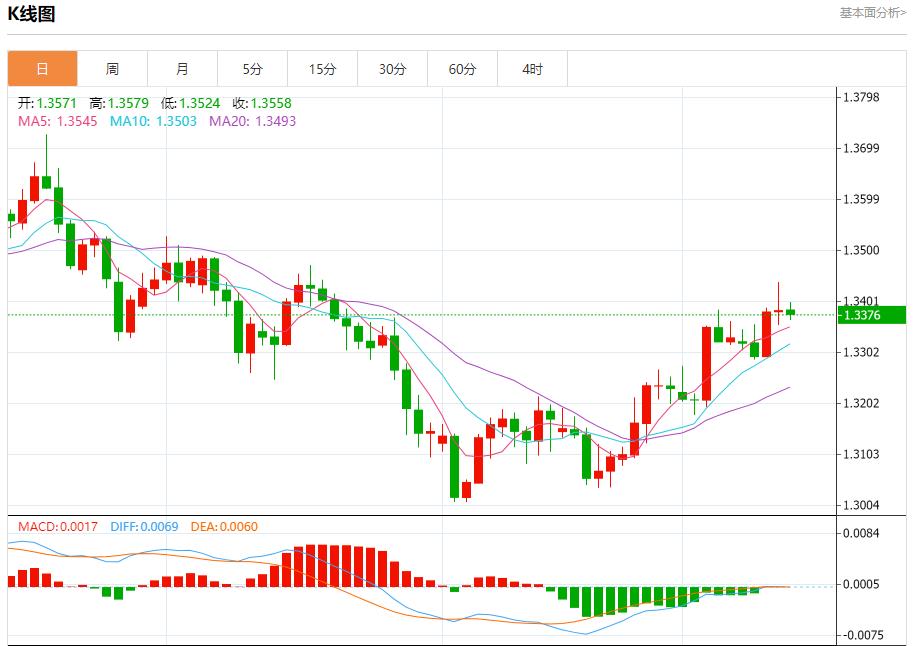
GBP/USD: As of 21:20 Beijing time, GBP/USD fell, now trading at 1.3376, a decrease of 0.05%. GBPUSD fell in the last trade of the session before the New York session as resistance settled at 1.3415, a potential target in our previous analysis to collect gains from the previous move in an attempt to offload some overbought conditions on the relative strength indicator, especially if negative signals emerge.
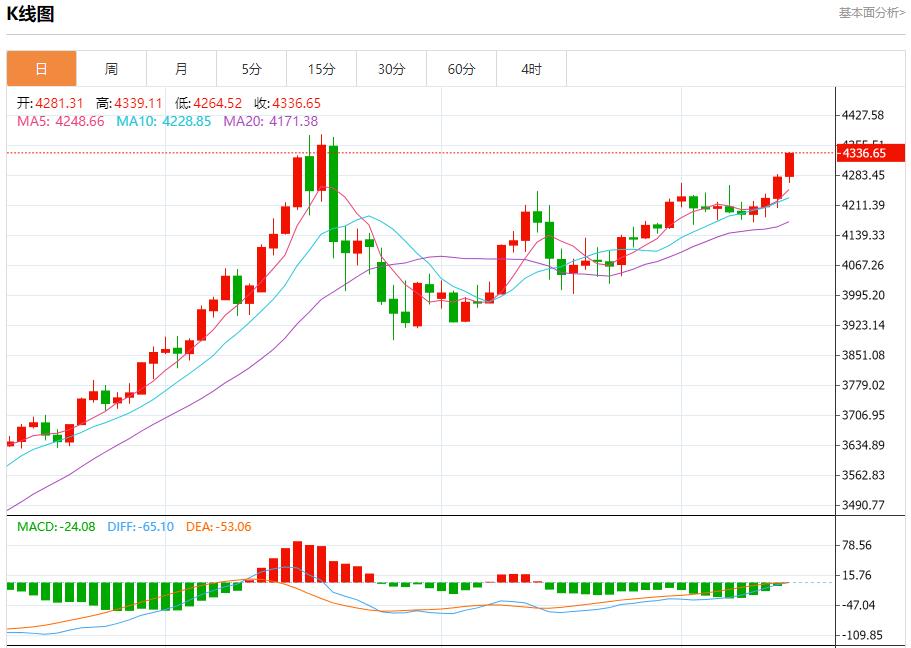
Spot gold: As of 21:20 Beijing time, spot gold has risen and is currently trading at 4336.18, an increase of 1.32%. Pre-market in New York, (gold) prices rose on the last trading day, breaking through the main resistance level of $4,300, which represents our expected target in the previous analysis, which continues to trade above the EMA50 and along the secondary trendline in the short term, on the other hand, we note that the relative strength indicator has reached overbought levels, reducing the gains the precious metal is about to trade.
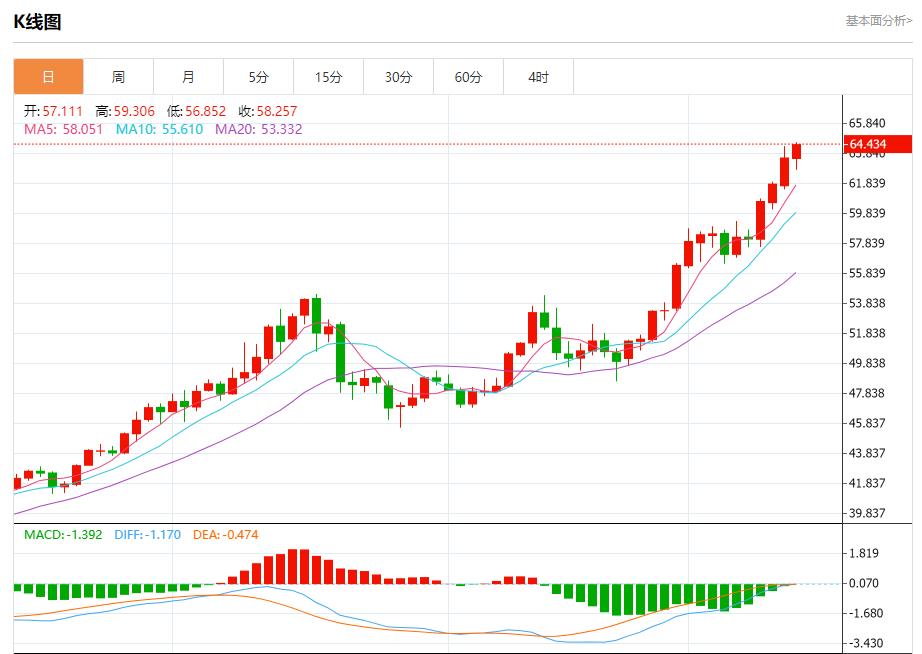
Spot silver: As of 21:20 Beijing time, spot silver has risen, now trading at 64.439, an increase of 1.39%. In the New York pre-market, the (silver) price continued to rise in the last trading day, taking advantage of its trading along the bullish trend line on the steep slope, indicating the dominance and stability of this trajectory, moreover, continuing to generate positive pressure as it trades above the EMA50, noting the emergence of positive signals on the relative strength indicator, despite reaching overbought levels.
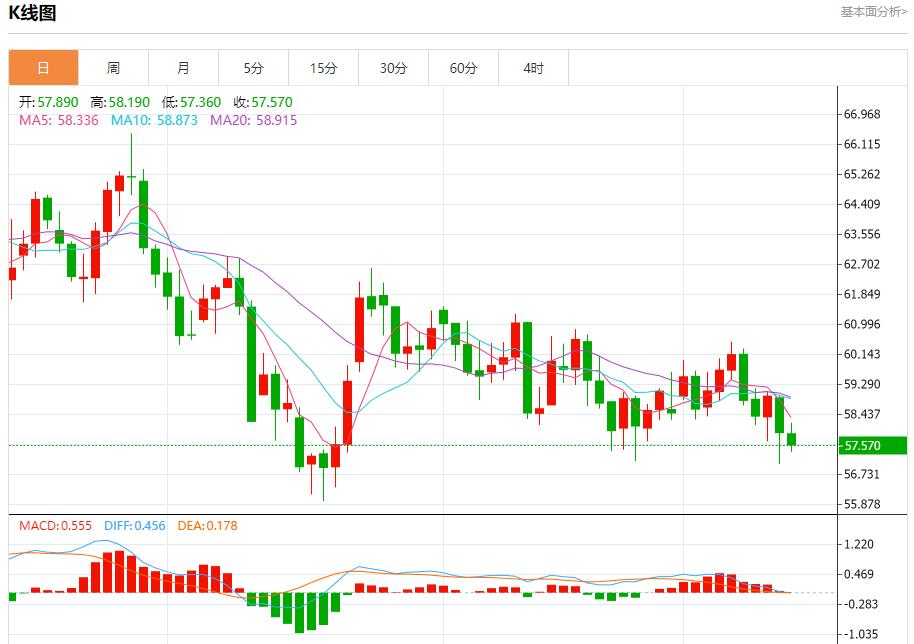
Crude oil market: As of 21:20 Beijing time, U.S. oil fell, now trading at 57.580, a decrease of 0.03%. Prices (crude oil) fell in the last intra-day trade before the New York session, hitting key support at $57.35, a support that is exactly where we expected it to be in this morning's analysis, while prices are trading along a slight downward trendline in the short-term, with negative signals from the Relative Strength Index adding to the downward pressure around the price after reaching overbought levels.
⑴ Capital Economics economist Ruth Gregory said in a report that the unexpected contraction of the British economy in October strengthens the case for the Bank of England to cut interest rates next week. ⑵ She noted that the 0.1% contraction in the overall economy in October was particularly disappointing given the modest growth in manufacturing output. Manufacturing rebounded after a cyberattack on Jaguar Land Rover in September. ⑶Gregory said: "It is worth noting that the economy has grown in only one month in the past seven months. The size of the economy is the same as at the beginning of the second quarter, and manufacturing output has not exceeded mid-2023 levels." ⑷She said that a weak economy, a slowdown in the labor market, and falling inflation have increased market confidence in the Bank of England's 25 basis point interest rate cut on December 18.
⑴ Nathan Sheets, global chief economist at Citigroup, said in a report that although U.S. debt levels pose a headwind to the economy and markets, their impact should be controllable. ⑵ He pointed out: "Any premium required by the market to absorb the upcoming Treasury bond issuance will not significantly restrict economic growth or the government's borrowing ability." ⑶ Sheets believes that the core advantages of the U.S. economy-including its resilience and flexibilityStrength - giving investors the confidence to buy its debt despite high debt levels and political noise. ⑷ He emphasized: "In the final analysis, there are not many substitutes for U.S. Treasury bonds."
The above content is about "[XM Foreign Exchange]: The Fed hawks rarely "brighten the sword", analysis of the short-term trend of spot gold, silver, crude oil, and foreign exchange on December 12". It was carefully www.vifu.netpiled and edited by the editor of XM Foreign Exchange. I hope it will be helpful to your trading! Thanks for the support!
Due to the author's limited ability and time constraints, some contents in the article still need to be discussed and studied in depth. Therefore, in the future, the author will conduct extended research and discussion on the following issues: